
This past weekend, since fires are not permitted at dispersed sites anywhere in the National Forests – only on BLM land in the desert – we decided to head towards the Southern tip of Death Valley NP with no other plan in mind.
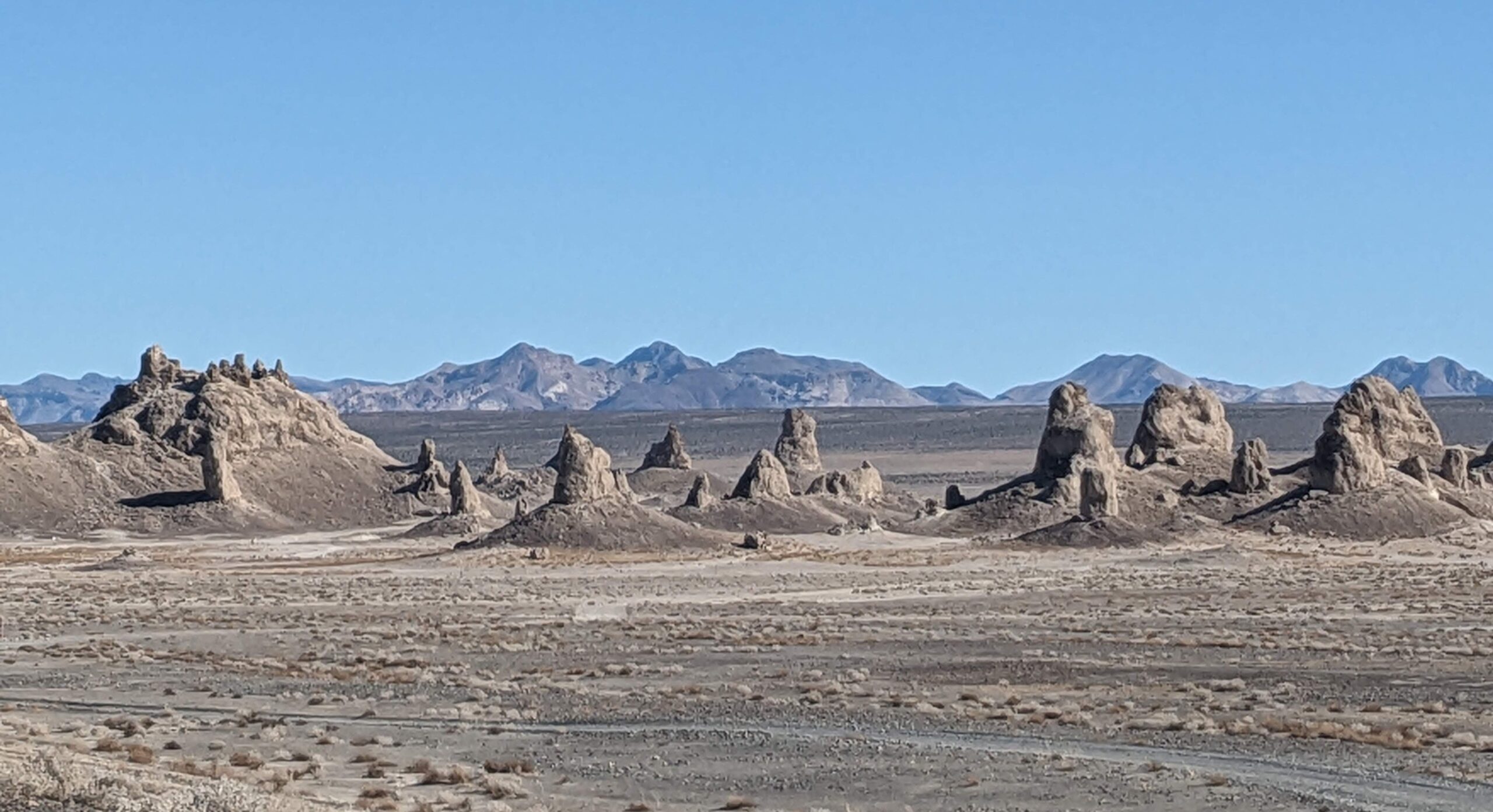
Fortunately, after passing through Ridgecrest, home of China Lake Naval Weapons Base, we stumbled upon the Trona Pinnacles, which are pretty cool formations caused by water over 10,000 years ago. There is a short scenic drive and walk we took, but we agreed the best view was before descending down next to the pinnacles themselves. It also appeared popular for camping, as we saw several trucks/RVs set up for the weekend.
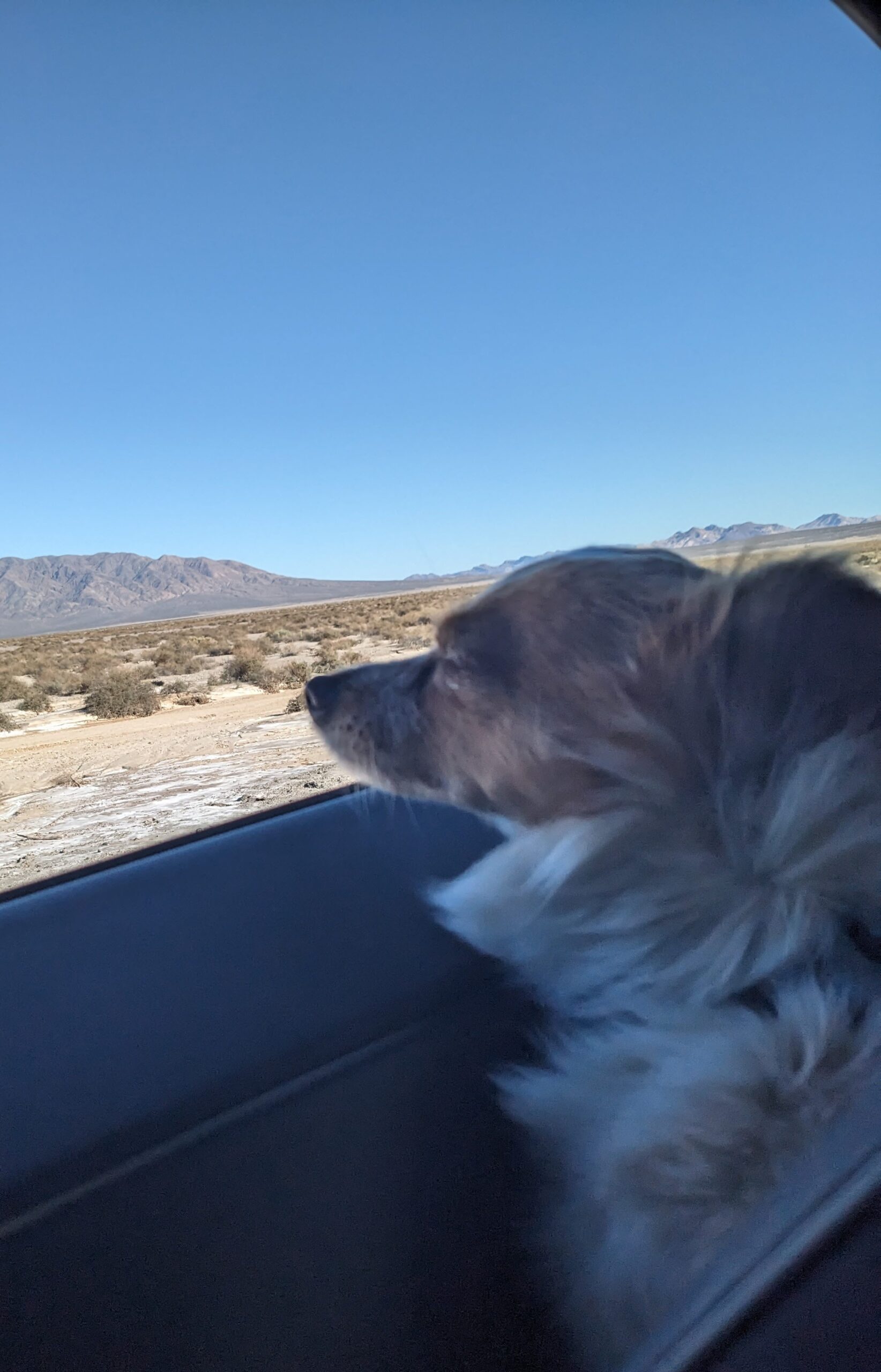
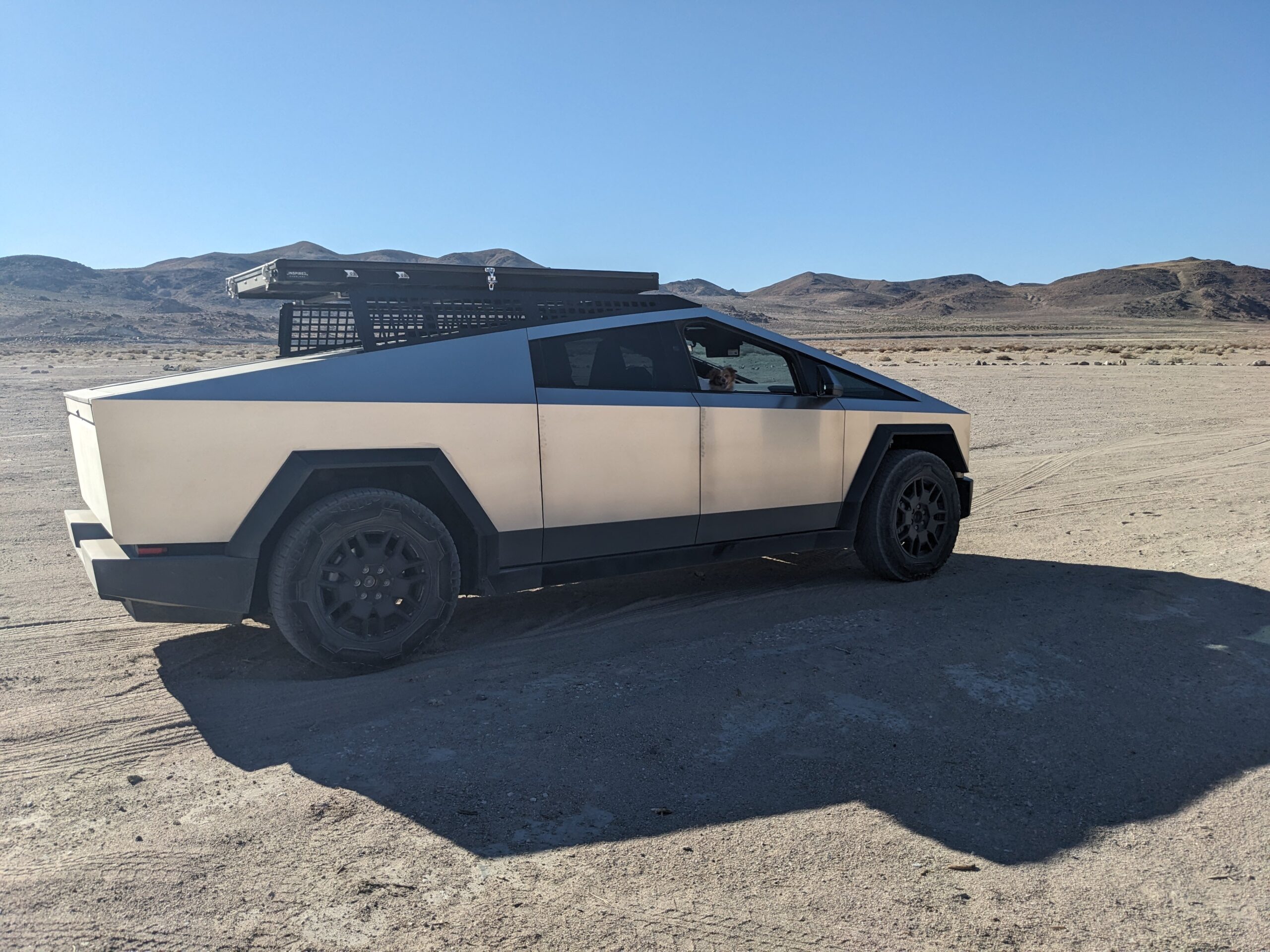
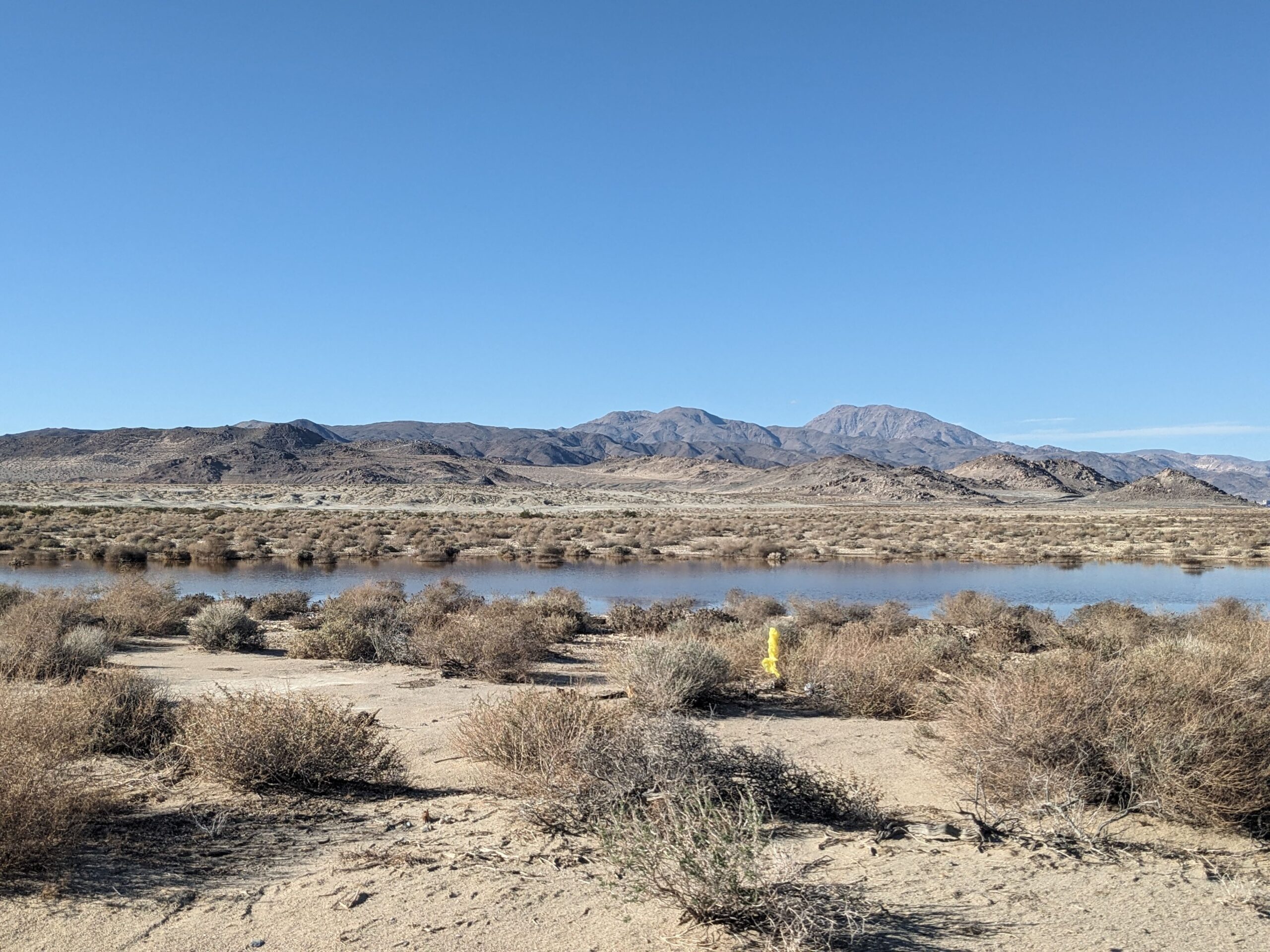
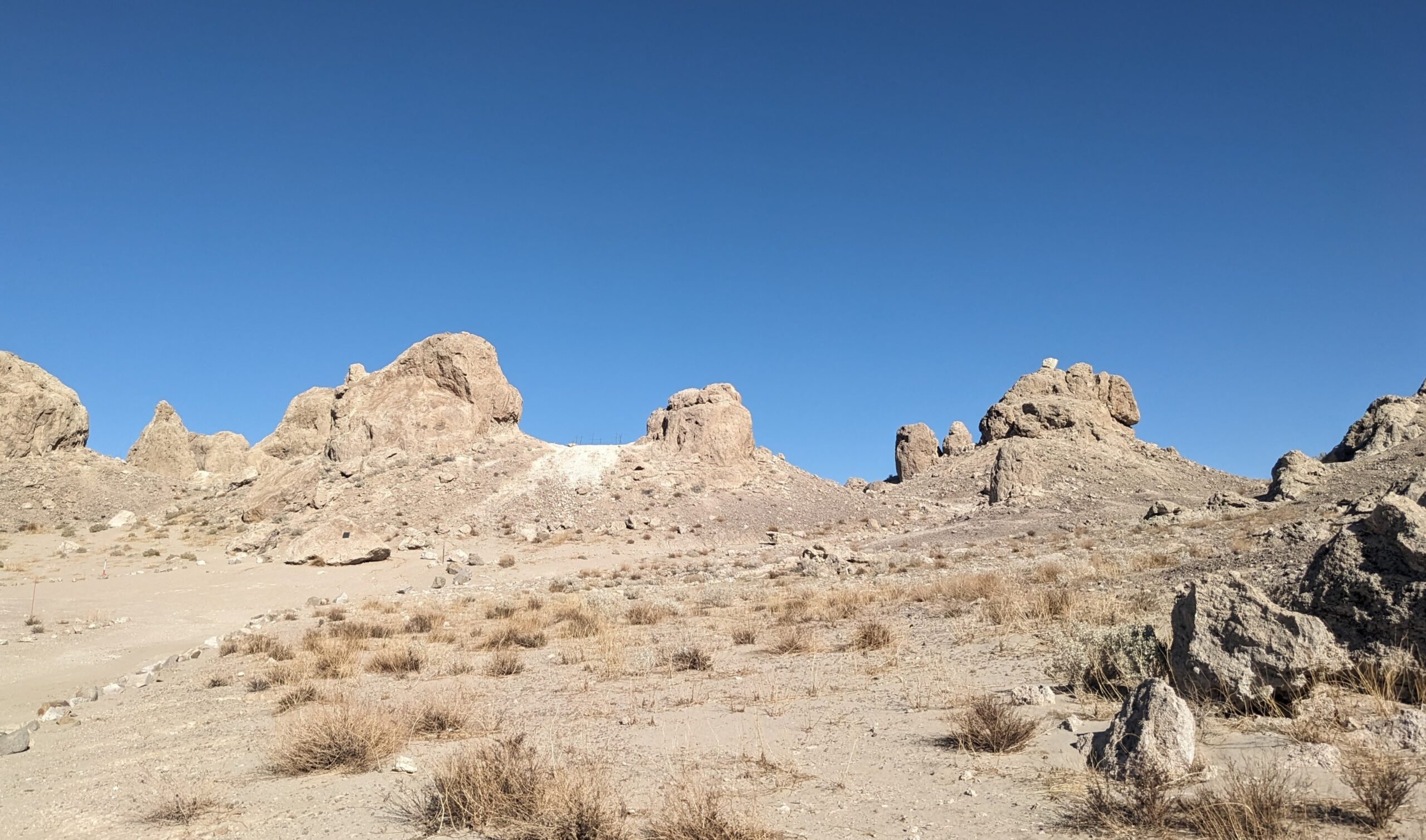
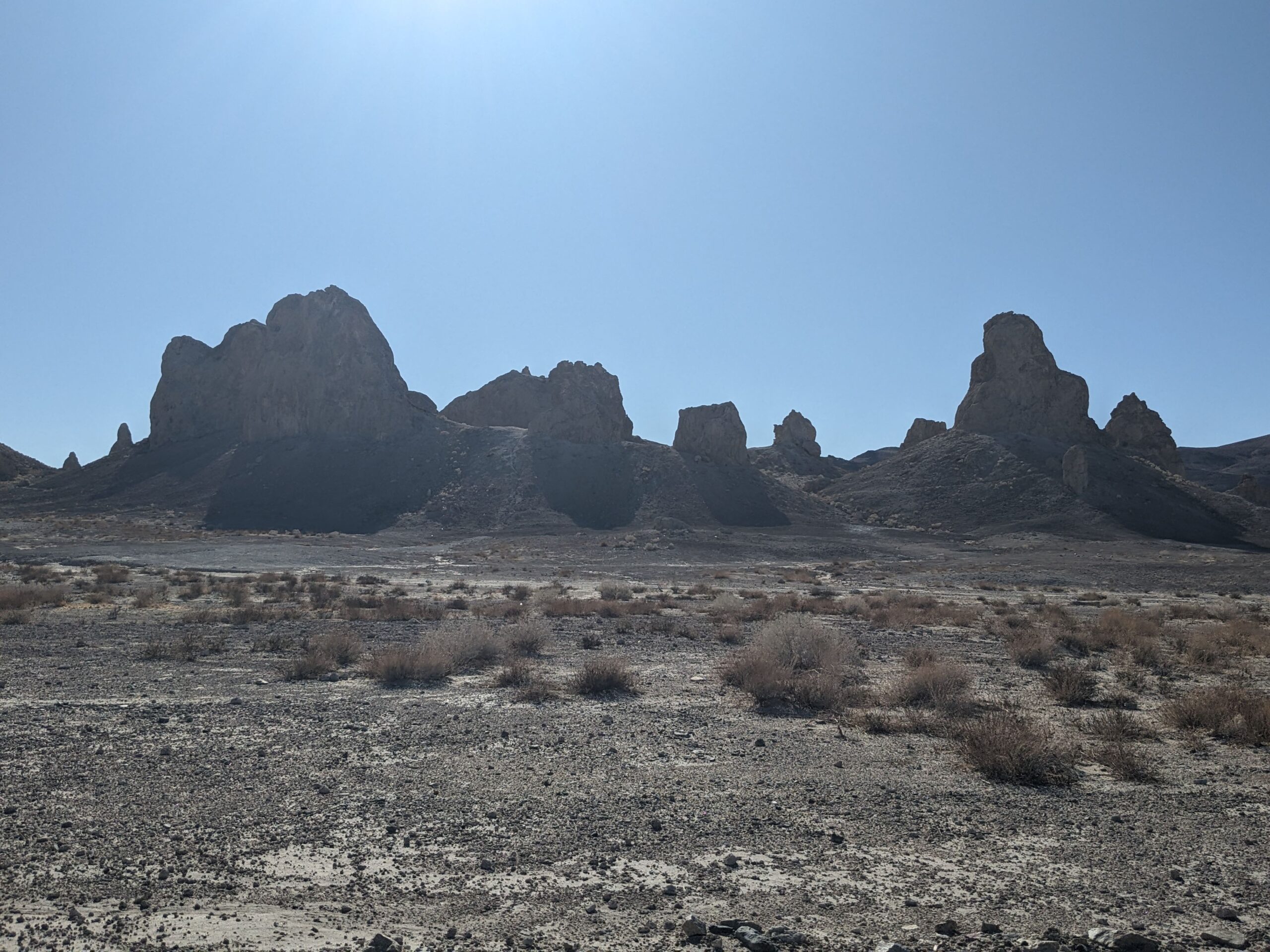
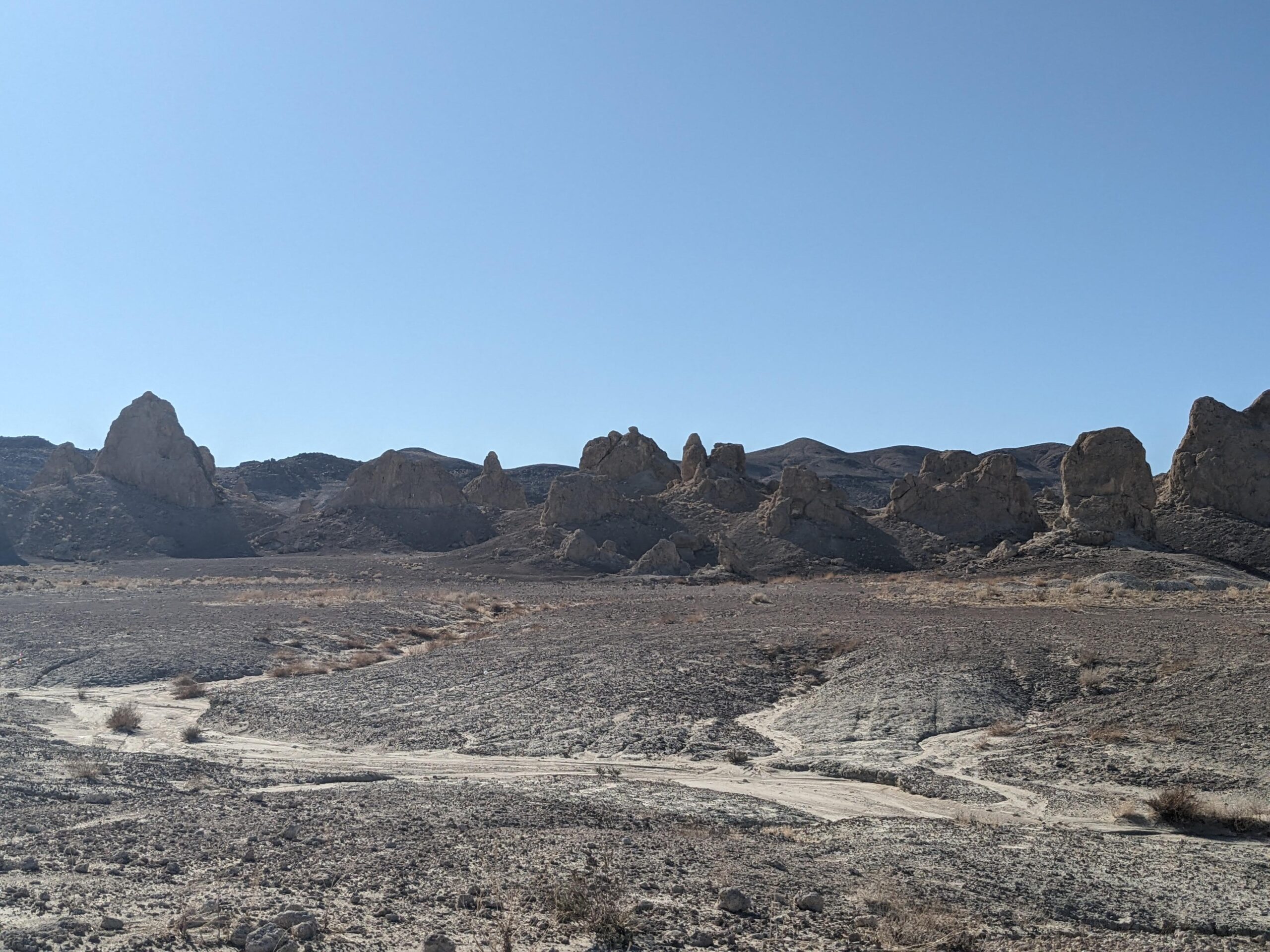
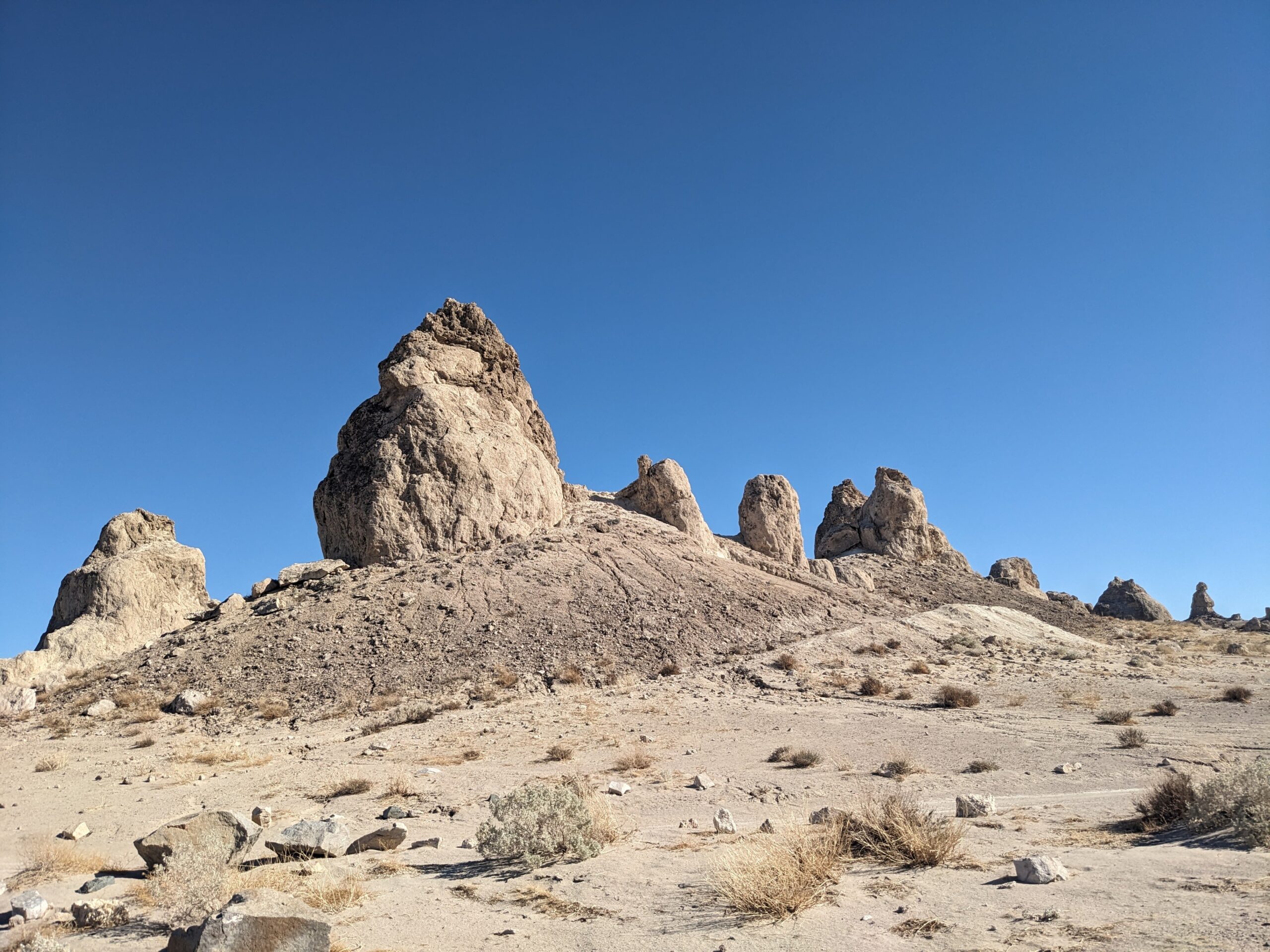
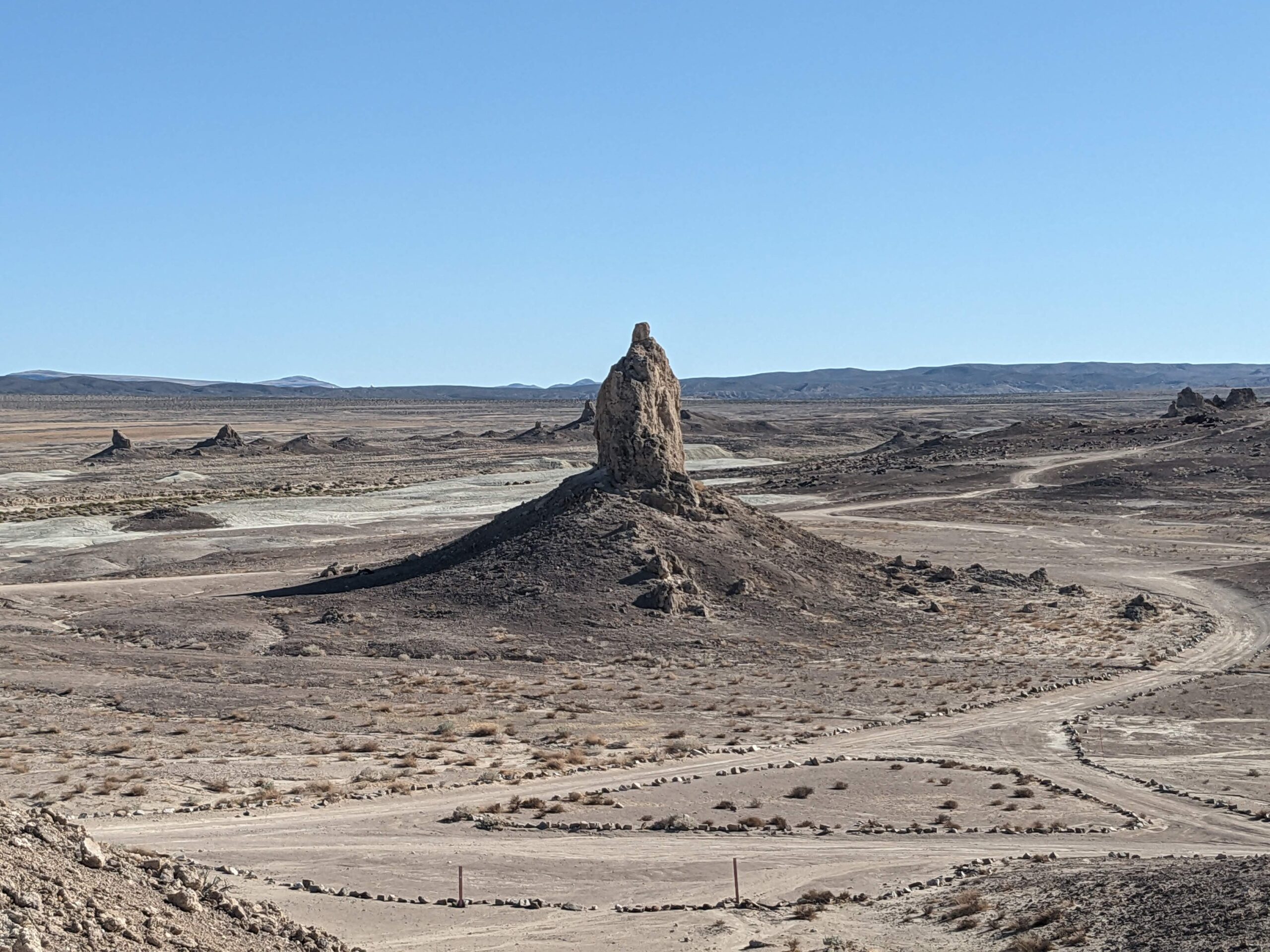
We then passed through the town of Trona itself, named for the mineral, which was probably 50-70% abandoned due to industry and population moving elsewhere. That said, we read that it is home to the only dirt football field in the US since it’s impossible to grow grass due to the mineral content in the soil, so the ~100 students in middle and high school at least have that going for them?
The road wound down into the valley next to the Panamit Mountain Range, and Jacob spotted a ghost town sign so we took a side trip to see Ballarat. Having closed down in 1917 there wasn’t much there, but still cool to see the remains of the post office and a couple other buildings that served the small mining community. Now, it’s pretty much only a small general store and a large “camping area” by donation with one family and a resident mule.
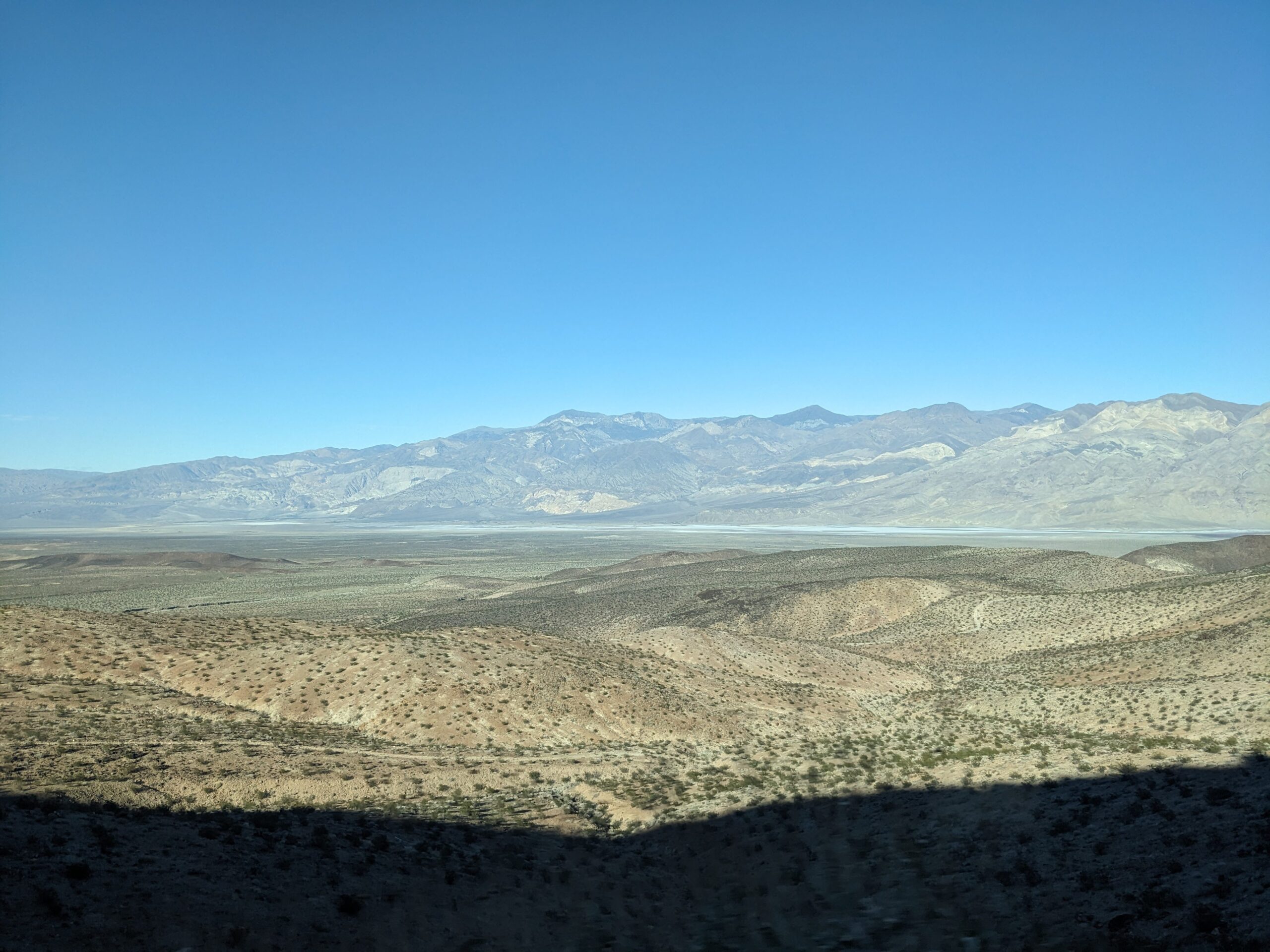
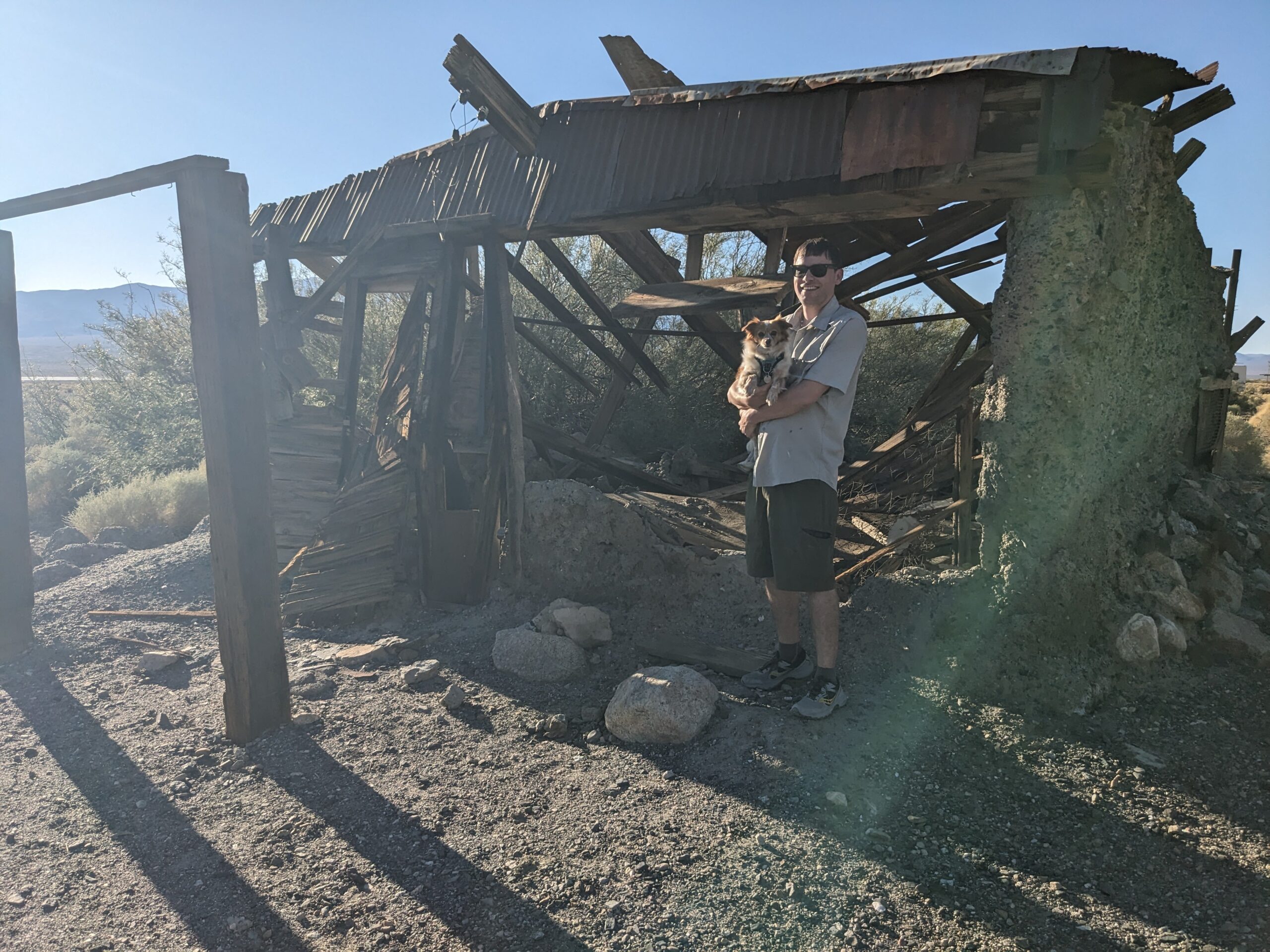
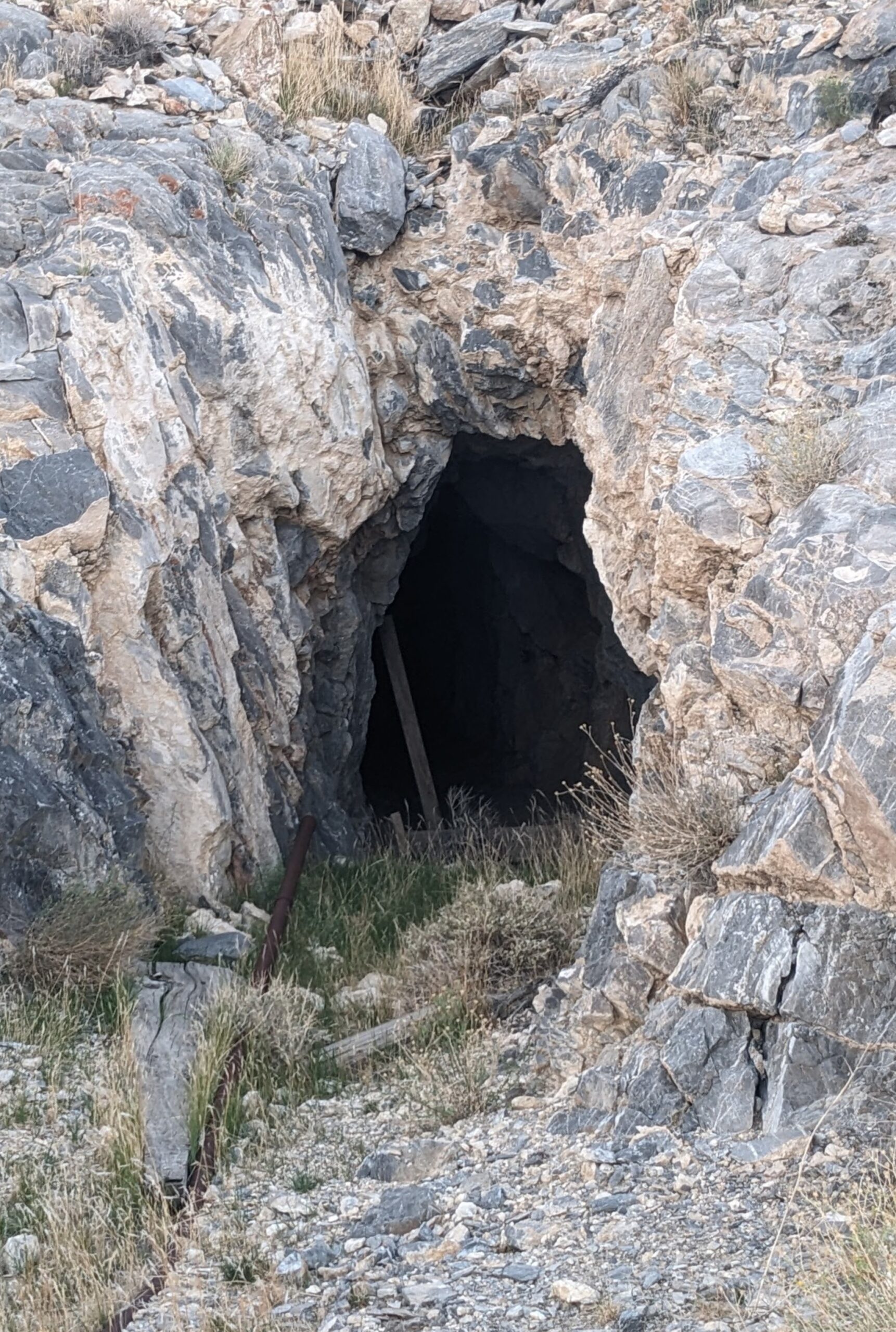
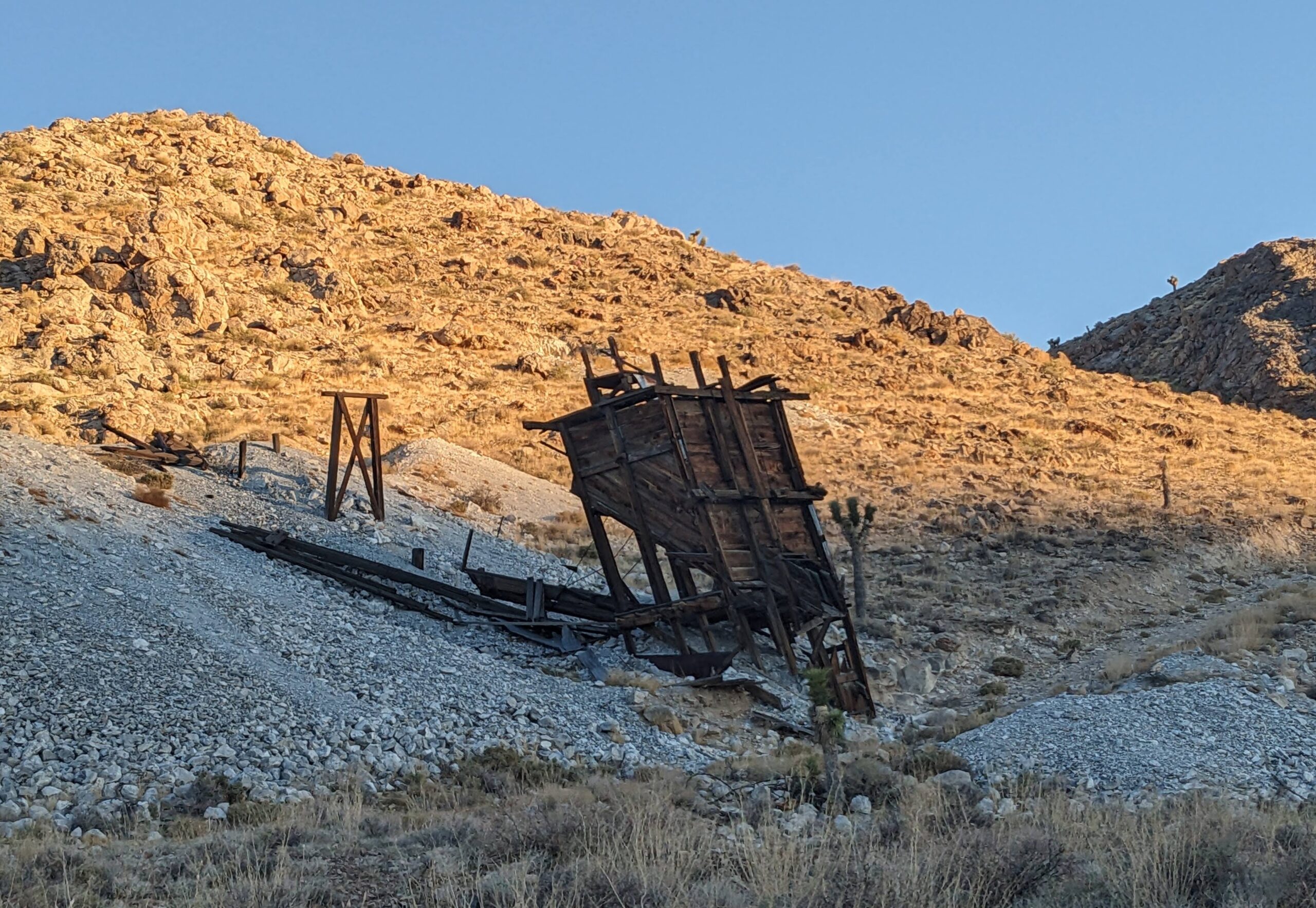
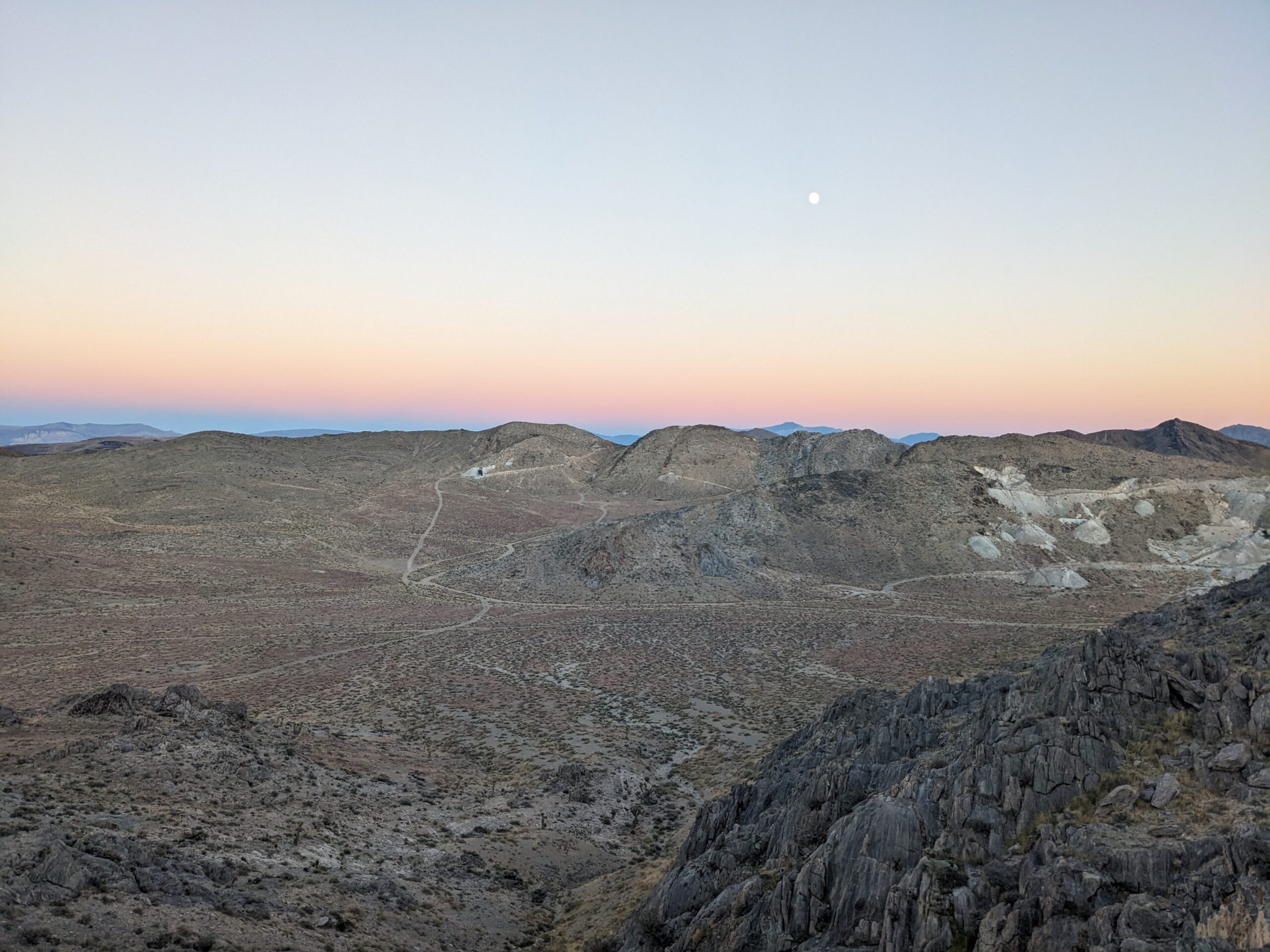
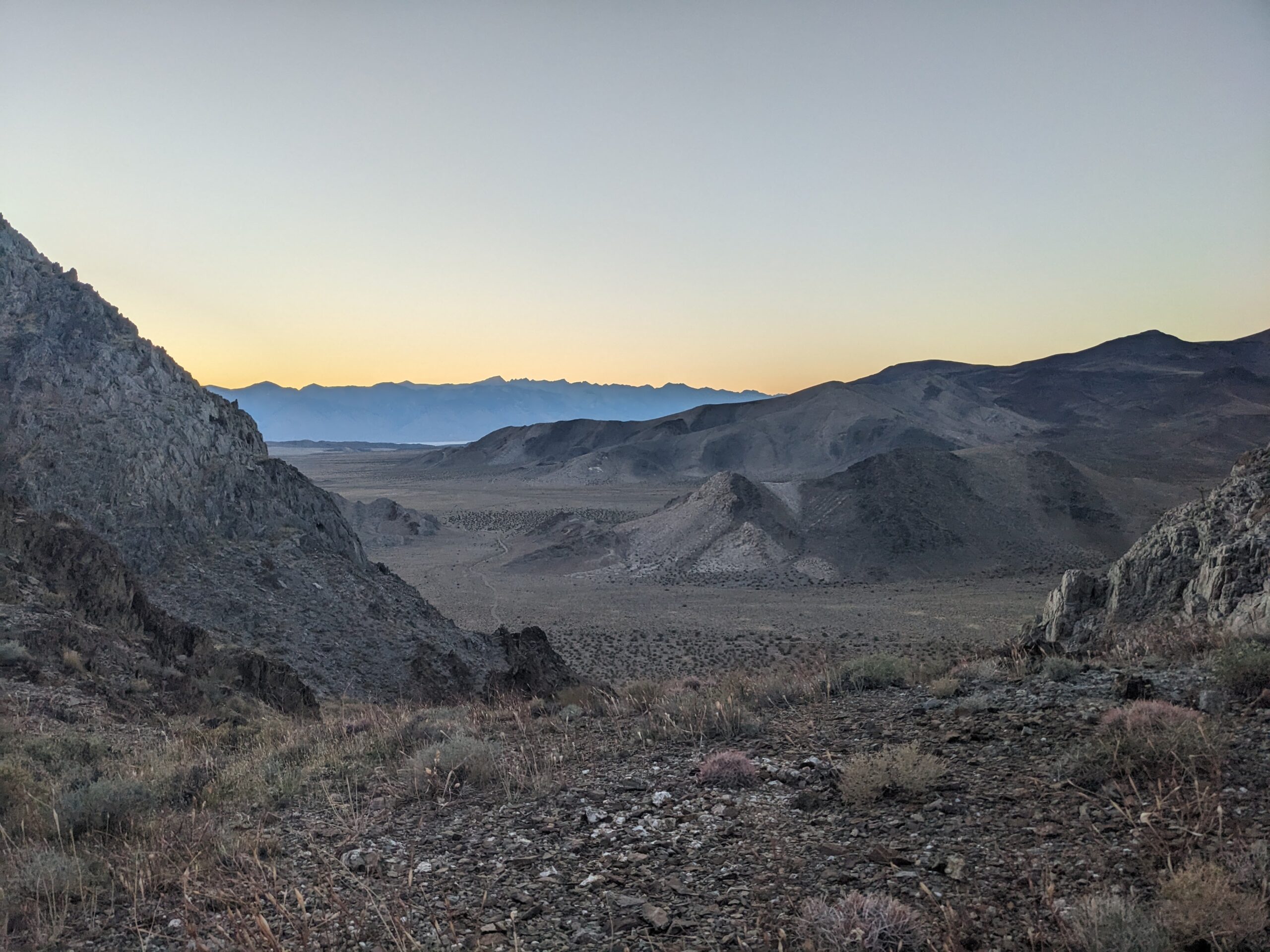
At that point, we were basically in Death Valley which meant few opportunities for any interesting dispersed camping, so we headed towards Panamit Springs, stopped briefly at the Father Crowley Viewpoint, then once out of the park near Olanche, found a secluded spot in an area named Talc City. I went for a short run while Jacob explored the area, and it’s evident it was a very active mining spot (for talc) by the amount of abandoned structures, cars, and still-open shafts. If we knew more about how to explore safely it would probably be a top spot for going into the mines, but we know it’s incredibly dangerous so did not partake. This blog shows a little more about that side of things as well as the history of the area.
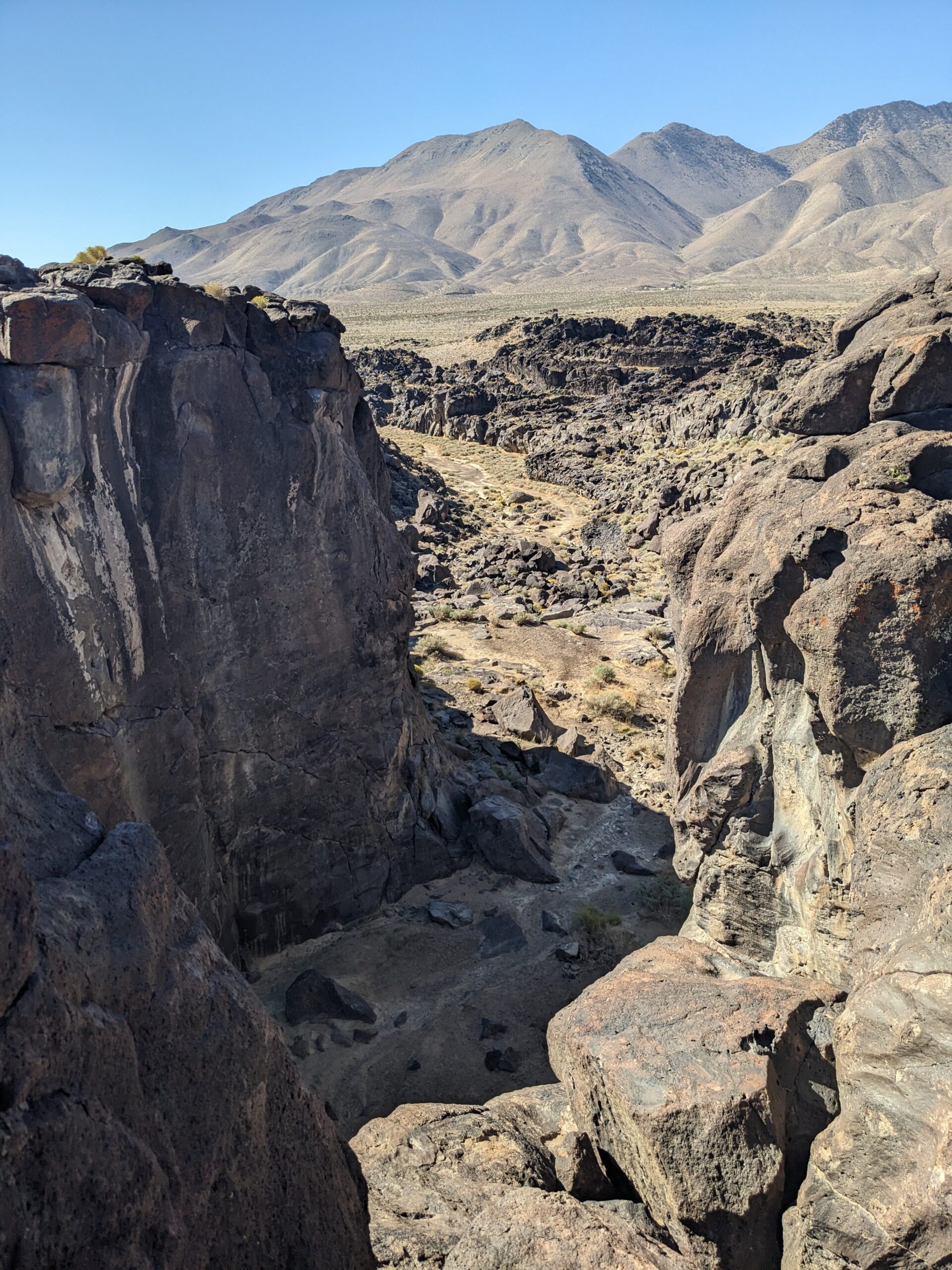
In the morning, we got a late start but due to the cooler weather were able to hit a stop that’s been on our list for some time: Fossil Falls. Being right off the highway we’ve wanted to go there for awhile but it’s usually far to hot. Thankfully it was a short venture under 1 mile round trip, and worth it to see the interesting remains of volcanic activity. Nearby is the reddish Saltlake cindercone, described by one reviewer as their “favorite landmark in California for sure” (must not have traveled much?).
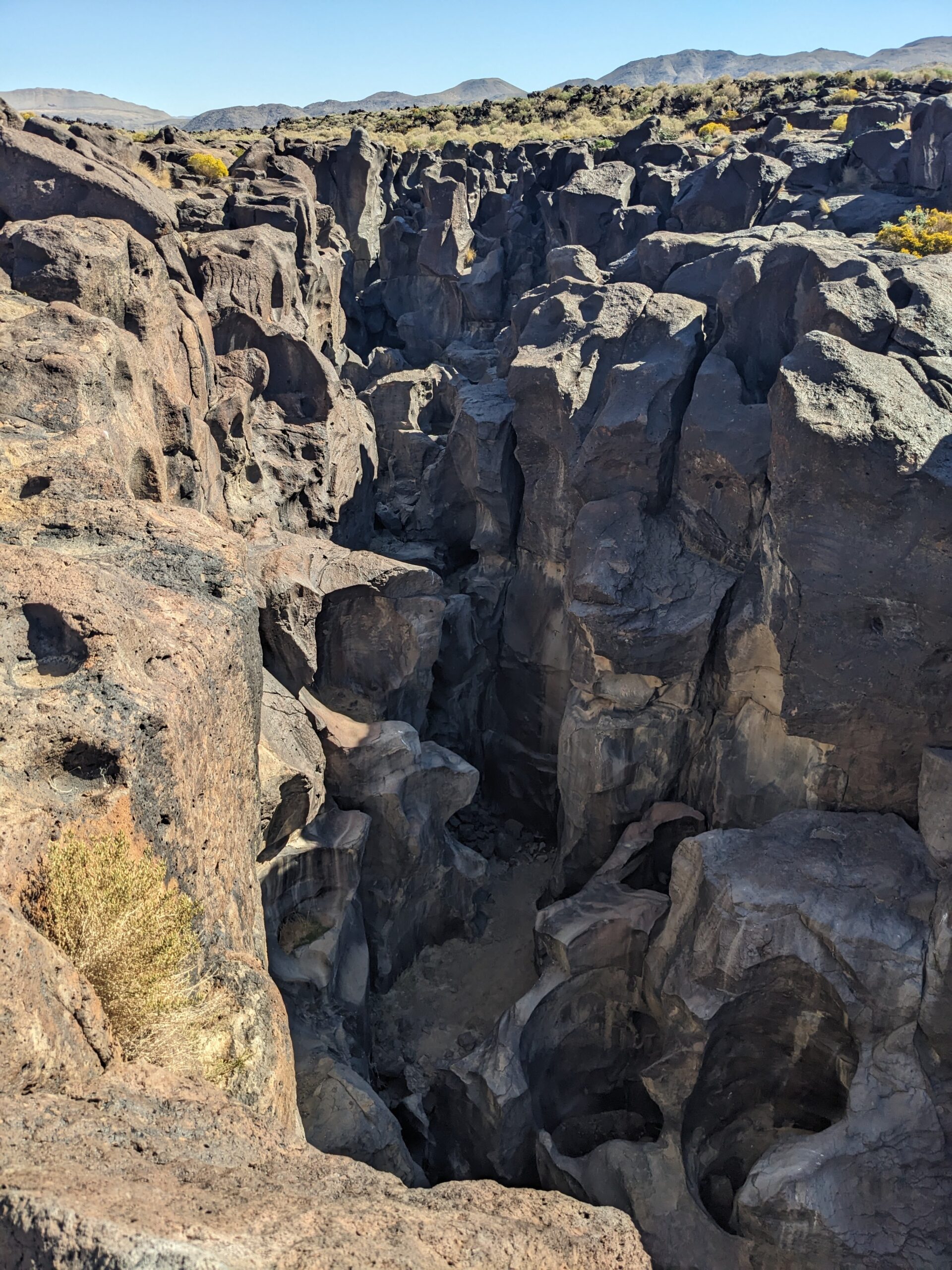
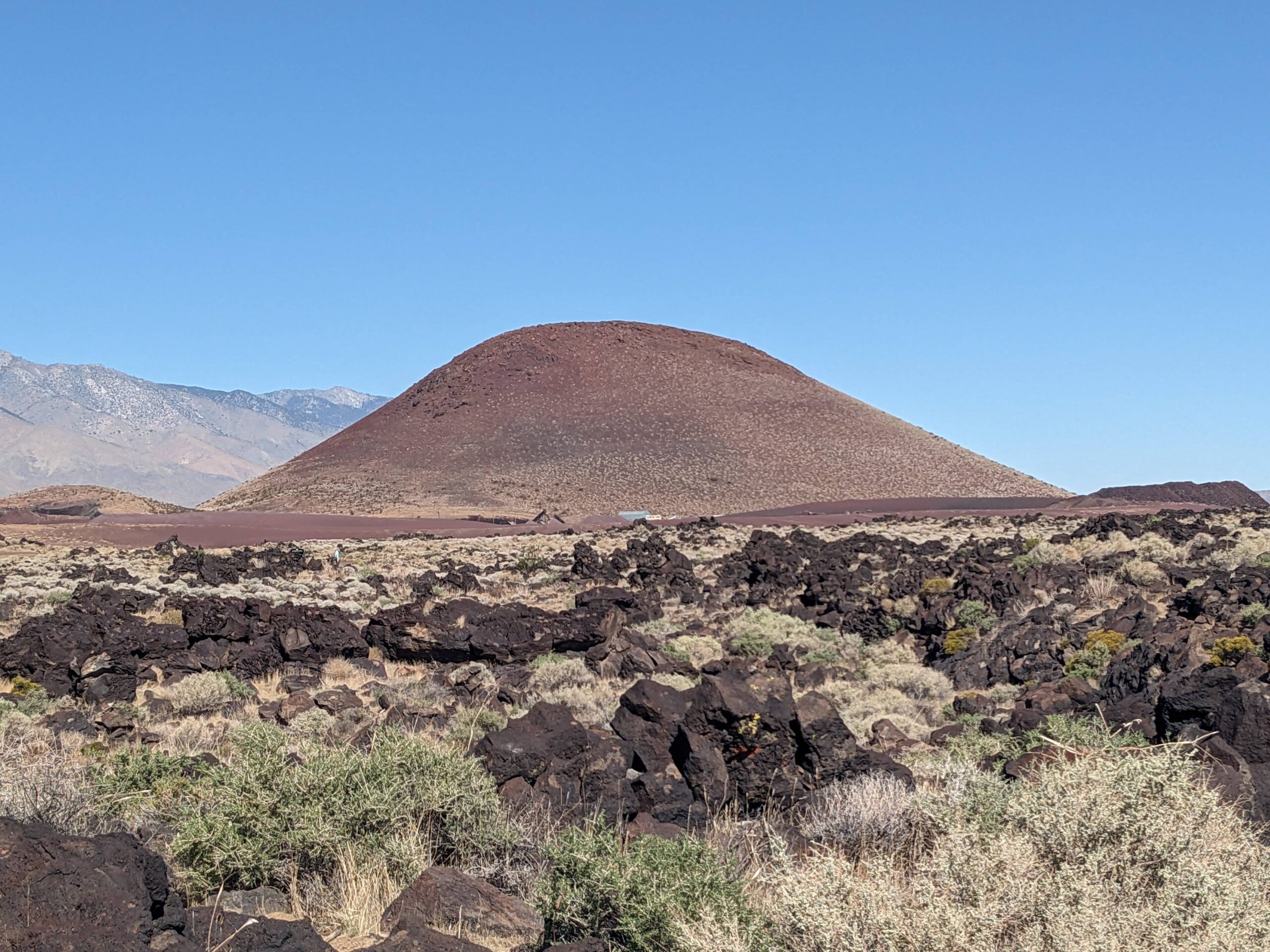
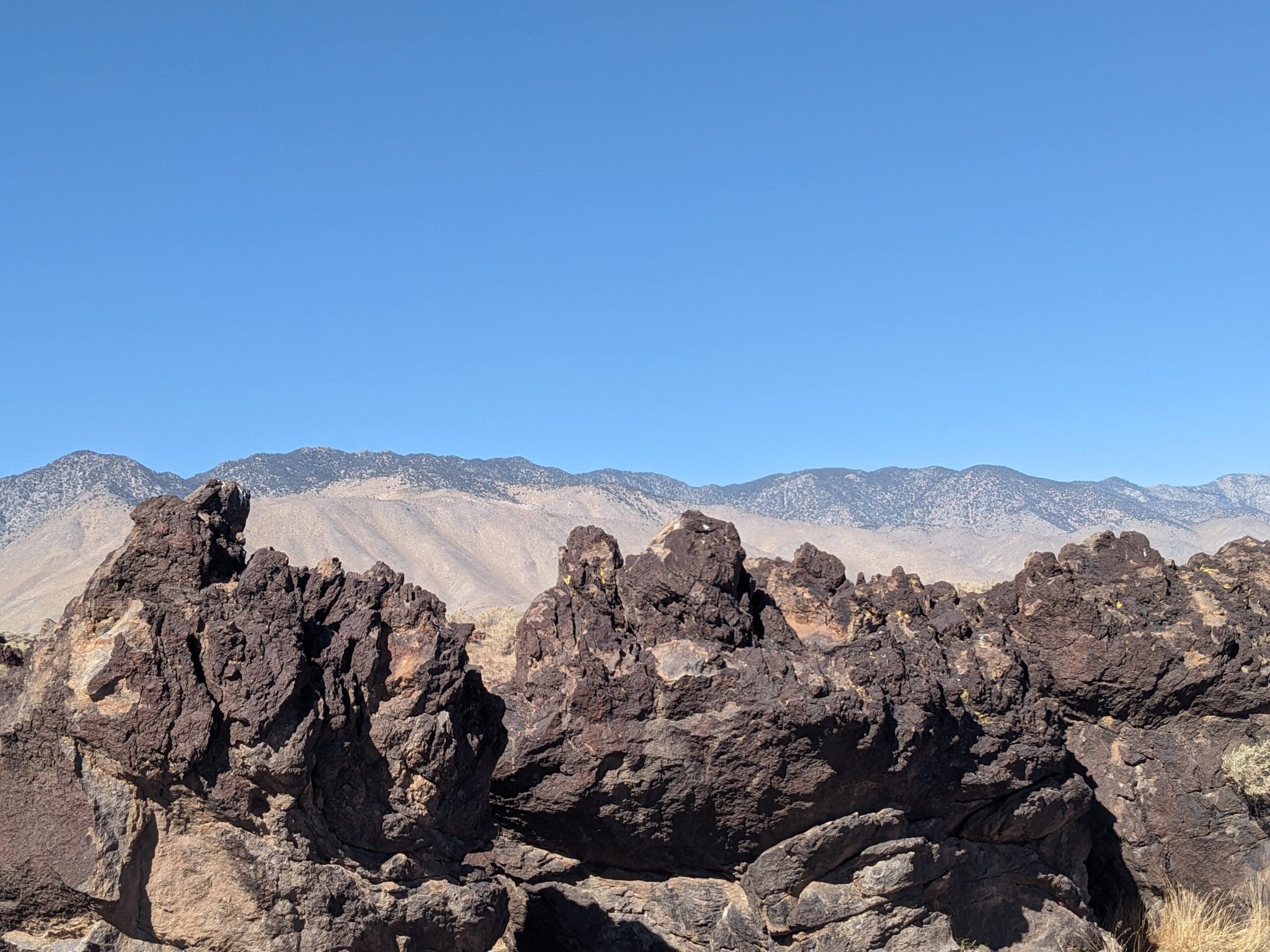
All in, it was a short trip of slightly over 24 hours but covering a lot of territory and some areas we’ve not yet been to. As temperatures continue to drop we’re looking forward to getting into the desert more although it can be challenging with lack of charging stations in remote areas!
Trip type: Car Camping
Distance: N/A
Altitude Gain: N/A
Length: 1 night
10/4/25-10/5/25
Lots of cool mines and geologic sites around there. Talc (soapstone) is used for old lab bench tabletops, as it is resistant to heat and chemicals. It still has a lot of uses, and China, Brazil and India are now the largest producers. It has an interesting chemistry, and is the softest on the hardness scale. Lot of geology goes into producing it as it is slowly formed from really old magnesium minerals like serpentine, which come from crust subducted and then metamorphized.
Probably not Lucys favorite trip. Nice to have a campfire though.